

Trump Administration Targets Chinese Firms for Misusing AI Technology Developed in US
Ai Threats and Security Measures
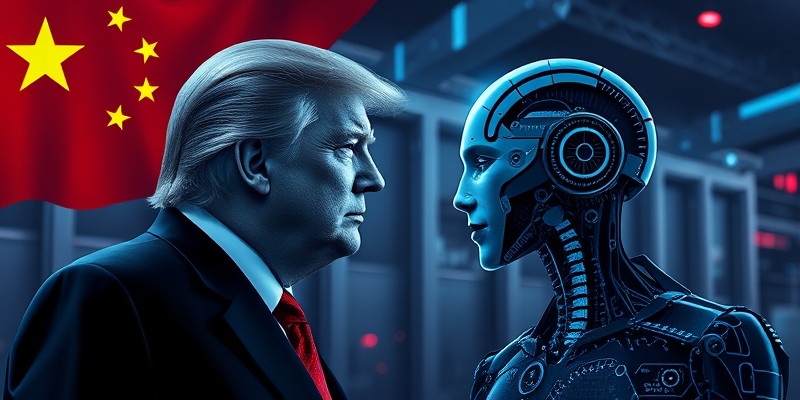
The Trump administration is taking steps to address the growing threat of foreign entities exploiting US-made artificial intelligence models.
Foreign Entities Exploiting US-Made Ai Models
A memo issued by Michael Kratsios, the president’s chief science and technology adviser, accuses foreign entities, primarily those based in China, of engaging in deliberate and industrial-scale campaigns to extract capabilities from leading AI systems made in the US.
This practice, known as “model extraction,” allows rival nations to replicate the functionality of US-developed AI systems without having to invest heavily in research and development.
Anthropic, the maker of the Claude chatbot, has also accused Chinese AI laboratories of engaging in campaigns to illicitly extract Claude’s capabilities to improve their own models.
Laws and Regulations
US lawmakers have introduced a bill to establish a process to identify foreign actors that extract key technical features of closed-source, US-owned AI models, and to punish them with measures including sanctions.
The bill aims to prevent the theft of US intellectual property and promote fair competition in the AI industry.
Cybersecurity Measures
The use of “shadow AI” in organizations poses a significant challenge to cybersecurity teams, requiring a rethinking of defense strategies in the age of autonomous agents.
Experts recommend a combination of traditional security measures and novel approaches, such as behavioral analysis and machine learning-powered detection systems, to stay ahead of emerging threats.
As the AI landscape continues to evolve, it is essential for organizations to strike a balance between the need for rapid experimentation and the rigorous controls required for enterprise-grade deployment.
By adopting a holistic approach to AI development and deployment, organizations can minimize the risk of security breaches and ensure the secure adoption of AI technologies.