

Why Cybersecurity AI Scientists Are Shaping the Future of Digital Defense
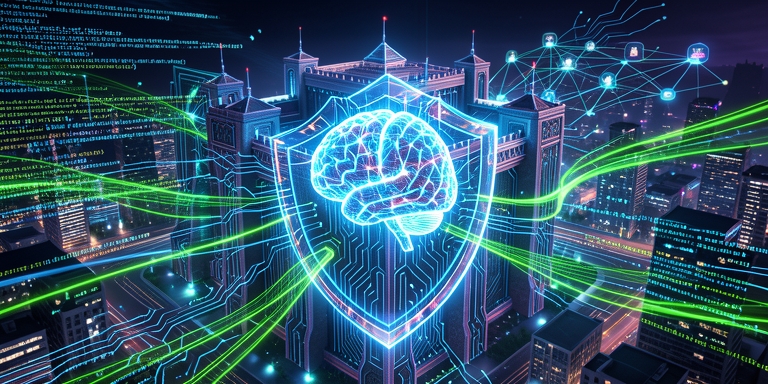
Researchers advocate for the emergence of a cybersecurity AI scientist role as autonomous systems increasingly handle security tasks.
The Cybersecurity AI Scientist Framework
The authors present Hephaestus, a modular multi-agent architecture featuring specialized components for problem definition, threat analysis, tool creation, and reporting. The system’s name references the Greek deity of craftsmanship, symbolizing its dual capacity for offensive and defensive operations.
Challenges in Applying Automated Research Models
The paper highlights inherent challenges in applying existing automated research models to cybersecurity. Unlike machine learning or biological research, cybersecurity investigations face dynamic environments where the subject of study evolves during analysis. Research platforms, safeguards, and tool availability change rapidly, complicating iterative experimentation. Validating findings also requires reliance on digital twins, cyber ranges, and evidence chains integral to the methodology itself.
The Four-Zeros Framework
The authors introduce a four-zeros framework addressing critical failure modes: risk, trust, incident, and energy. Risk focuses on hidden software vulnerabilities, trust ensures human oversight in automated processes, incident management addresses operational errors, and energy evaluates long-term organizational and ethical impacts.
Recent Advancements
Recent advancements underscore the risk dimension. Anthropic’s Claude Mythos Preview, part of Project Glasswing, restricted public access due to its advanced offensive capabilities. Reports link large-scale software defects, including long-standing vulnerabilities, to such models. The CyberGym benchmark tests agents against over 1,000 real-world vulnerabilities from open-source projects, with frontier models achieving single-trial success rates in the tens of percent and identifying new zero-day exploits.
Resilient Agent Legions
The paper emphasizes resilient agent legions as a core concept. Traditional defenses rely on static assumptions about perimeter security, team specialization, and human-paced repairs. These assumptions falter when both attackers and defenders employ autonomous agents, creating an attack surface that outpaces manual patching. The proposed solution involves distributed defensive agents across network edges, monitoring layers, coordination channels, and recovery functions. Each agent maintains operational resilience while adapting to evolving threats.
Long-Term Evaluation Metrics
Long-term evaluation metrics are defined by Lidong Zhai, a co-author, who describes a longitudinal protocol tracking research outcomes as models, tools, and threat environments evolve. The framework generates a profile matrix assessing research output, evidence reliability, calibration demands, system resilience, governance adherence, and consequence management. Zhai stresses the importance of measuring not just speed but strategic outcomes, including improved prioritization and sustainable defensive architectures.
Containment Mechanisms
Containment mechanisms are embedded at four architectural levels: capability, role, environment, and artifact. Offensive and defensive operations follow distinct authorization pathways, with sensitive tasks isolated in digital twins and cyber ranges. Key governance questions include user authorization, operational context, and release constraints.
Open Challenges
While the paper does not present a fully implemented system, it identifies open challenges such as heterogeneous defense targets and the difficulty of distinguishing offensive and defensive code uses. The authors argue that success should be measured by enhanced strategic clarity, not merely research acceleration.

About Author






 English