

Understanding the Cybercrime Supply Chain: 5 Stages & Costs
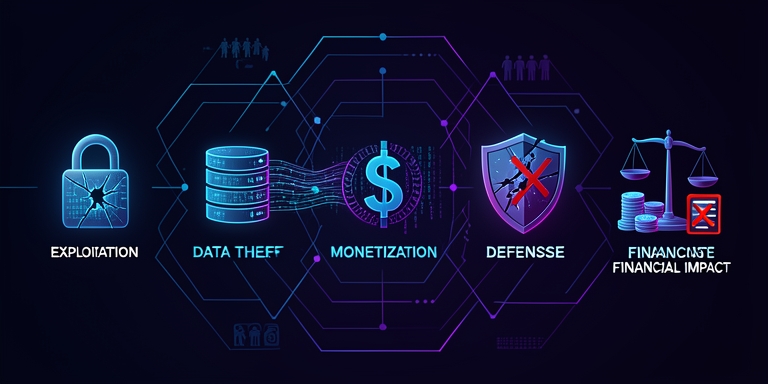
The cybercrime supply chain comprises five distinct phases, each associated with specific financial costs and operational roles. A detailed analysis presented in a recent discussion highlights how the traditional perception of ransomware attacks as the work of isolated actors is outdated by approximately 15 years. The breakdown outlines the interconnected functions within the cybercriminal ecosystem, emphasizing the division of labor that enables large-scale malicious activities.
Phase 1: Infostealer Malware Deployment
The first phase involves entities deploying infostealer malware to collect sensitive data, such as login credentials and system access tokens. These harvested materials are then passed to intermediaries who validate the quality of the compromised information before reselling it to other actors. The cost of such data varies significantly, with basic credential logs ranging from $5 to $50, while more sophisticated access points may command prices exceeding $1,000.
Phase 2: Intermediaries and Data Validation
The third stage focuses on ransomware-as-a-service (RaaS) operators, who develop and maintain the tools used in extortion campaigns. These platforms are often leased or sold to affiliates, who execute the actual intrusions. Affiliates leverage the provided toolkits to breach targeted systems, with the RaaS providers typically taking a percentage of the ransom payments.
Phase 3: RaaS Operators and Affiliates
The final phase involves launderers who facilitate the movement of illicit funds, employing techniques to obscure the origin of cryptocurrency transactions. This stage is critical in evading detection by financial authorities and law enforcement agencies. Technical details reveal that stolen session cookies, which bypass multi-factor authentication protocols, are a key enabler in accessing secured systems. This method allows attackers to maintain persistent access without requiring additional authentication steps.
Implications for Cybersecurity
The discussion underscores the evolving complexity of cybercrime operations, where specialization and financial incentives drive the efficiency of each stage. The analysis also touches on broader implications for enterprise security strategies, emphasizing the need for layered defenses against supply chain vulnerabilities. As threat actors refine their methodologies, organizations must adapt to mitigate risks posed by these interconnected criminal networks.

About Author









 English